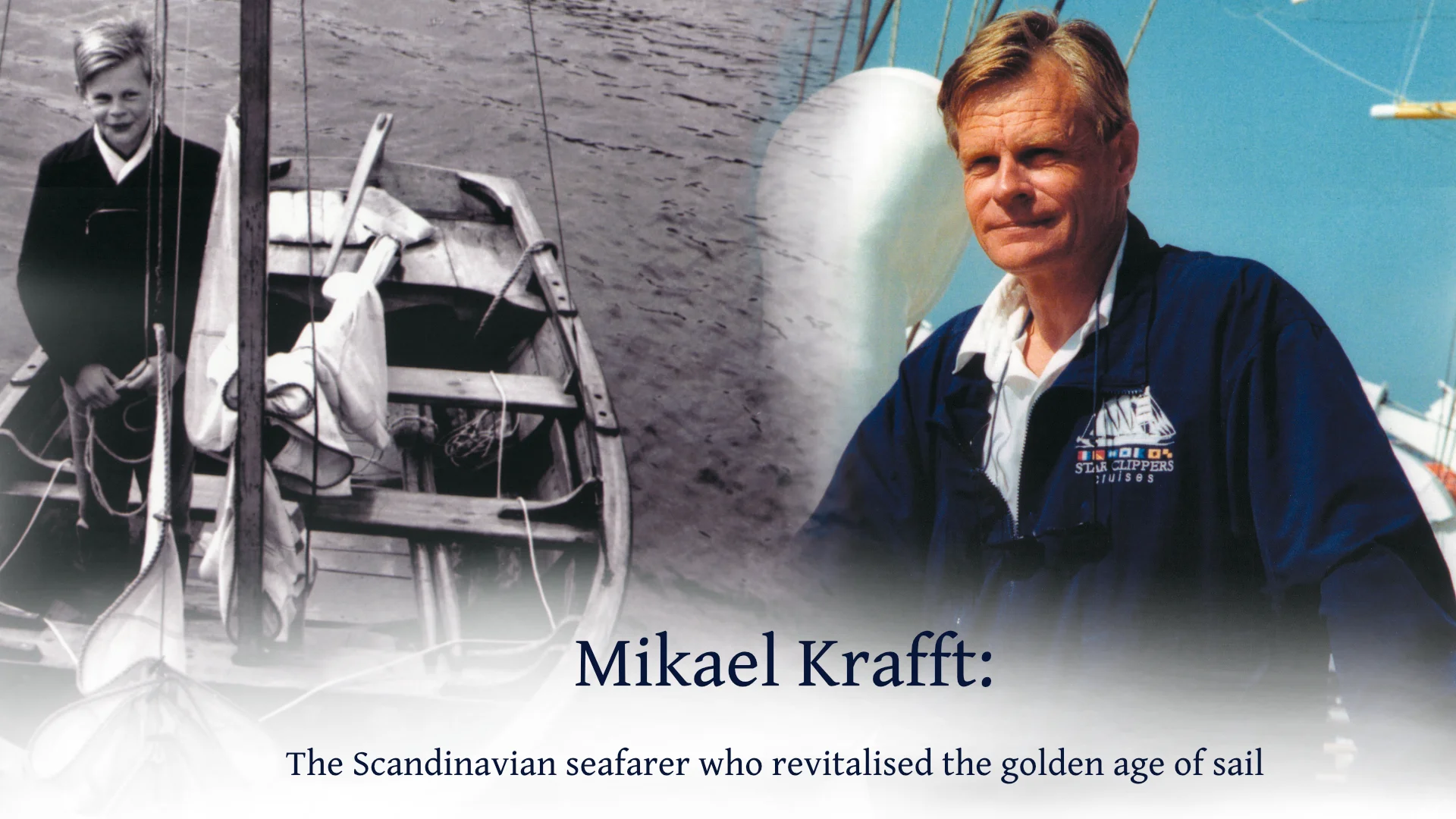
With a fleet of three iconic, full-masted tall ships under his wing - allowing passengers to experience a voyage like no other - it is no wonder Mikael Krafft hails Star Clippers as the third child he never had. Krafft was born in Stockholm but grew up 20 km from the Swedish capital, near the site of one of the largest shipyards in the world. As a young boy, he would listen spellbound while the old “sea dogs” who worked there would tell tales of the glorious Clippers, tall ships which dominated the oceans in years gone by.
We delve deeper into what inspired the creation of one of the leading small-ship cruise lines of today, which has in turn made dreams come true for so many people.
‘History, geography and DNA’, Mr Krafft states when asked about what motivated him to form Star Clippers. ‘We Scandinavians are descended from the Vikings, so seafaring is in our blood. My uncle was a sea captain, and the family has always had strong links with the sea. As a child, I was lucky enough to live near one of the finest yacht builders in the world - the Plym’s Shipyard - and I used to spend most of my free time there, picking up a lot of useful knowledge about mixing varnish and wood stain and how wooden boats are made.’
Of course, unabating intrigue as a young boy ignited a fire inside Mr Krafft which led to moments of youthful rebellion, he adds:
‘Growing up in the Swedish archipelago, all the kids had their own boats. I used to spend many happy times sailing around the islands and camping. I also made a forbidden solo trip twenty miles over the open sea to the Aland Islands, where the four-masted barque Pommern - formerly one of the famous Flying P liner and now a museum ship - is moored’.
As Mr Krafft’s family grew and evolved and technological advancements in the real world picked up pace, the ships remained as true to themselves as the day the company first became established in 1989. As vessels reminiscent of the golden age of sail, stepping on board a Star Clippers ship feels like taking a leap back an entire century. Rich mahogany woodwork, billowing sails with a mighty presence and gleaming bells that toll throughout the teak decks become a norm. For many, life on board evokes fond memories of days gone by, before the internet dominated day-to-day life and ‘switching off’ for a week or so was possible. It is easy to forget the outside world when the important question of the day is whether there is enough wind to allow the engines to turn off today, or which beach the Captain will visit for the lunch barbeque.
Despite an ever-increasing reliance on the internet and mobile phones, Krafft’s passion for delivering a genuine experience never faltered.
‘Our ambition has remained the same, to give passengers an authentic tall ship experience, as if they were chartering a private yacht. The sea, the sails and the camaraderie are what makes a Star Clippers cruise unique’.
Now widely recognised as the pioneers of small-ship sailing, it is no wonder Krafft revels in pride at how consistent the Star Clippers ethos has remained over the past three decades. There will never be motorised sails on board and traditional sailing methods take precedence over modern technology. Nostalgia is the perfect remedy for contemporary chaos, which is reflected by a high returning rate of passengers that have discovered the perfect antidote for over-stimulation in today’s world.
Star Clippers has allowed scores of guests to experience a snippet of true sailing, but for Krafft, this is his life and seafaring evidently courses through his veins. When asked about his favourite memory as a seafarer, suddenly Star Clippers’ bi-annual voyages across the vast Atlantic Ocean - perhaps intimidating to some - make sense.
‘I have crossed the Atlantic many times on different boats and after each crossing I felt sad that the trip was over; nothing beats watching the sun rise in the early morning light and setting in the evening with the famous green flash, and the sheer joy of sailing. I love the spirit of comradeship with passengers and crew that you get on an Atlantic crossing.’